We use limited cookies
We use cookies where necessary to allow us to understand how people interact with our website and content, so that we can continue to improve our service.
View our privacy policyWe use cookies where necessary to allow us to understand how people interact with our website and content, so that we can continue to improve our service.
View our privacy policyDr Arday’s death was the direct result of media harassment – we’re demanding a public inquiry to prevent this from ever happening again
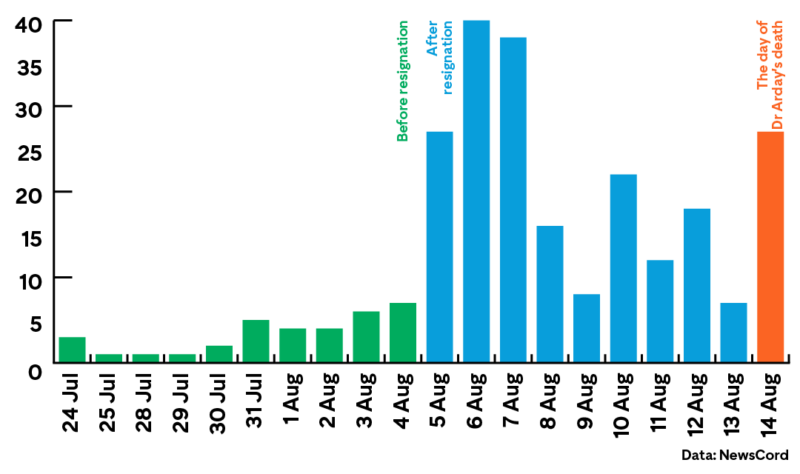
Before his death on Friday, Dr Jason Arday was subject to a barrage of racist, ableist and cruel media attention, which continued to escalate even after his resignation on August 5th.
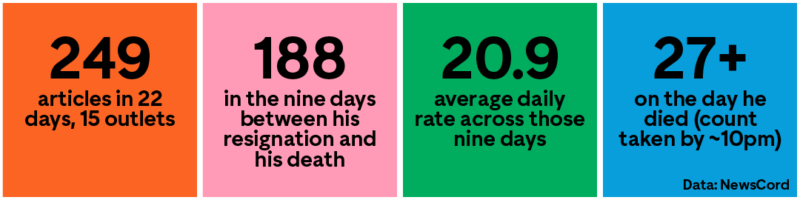
The press attention was unrelenting. 249 articles were published in 22 days, mostly led by the broadsheets. This wasn’t a tabloid scandal – the journalists involved were often public figures in their own right.
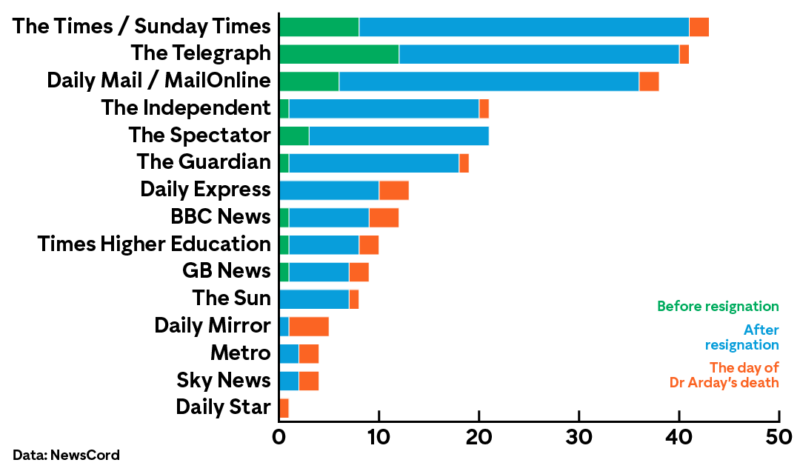
A resignation normally causes the media to back off, but they only produced more content. Stories about Jason were driving clicks – with outlets like The Times even putting out paid adverts for their articles.
In his resignation letter, Dr Jason Arday said to his supporters “you have carried me through some of the darkest moments of my life”; “I need time to heal”; “space to begin again” and that he had “reached the limits of what any person should reasonably be expected to endure.”
Jason wasn’t the only one asking the press to stop.
Professor Simon Baron Cohen released a statement on July 31st, leaning on his expertise in autism, stating:
“I’m very concerned about the impact of the media coverage on Professor Jason Arday who is autistic.
He has been accused of plagiarism and he was cleared of any academic misconduct following a rigorous investigation by Liverpool John Moores University.
And yet he continues to be systematically discredited over every detail of his life, daily. We should of course always investigate plagiarism to protect academic standards.
However, I cannot stand by and watch when an autistic man is on the ground and the kicking continues. This is relentless bullying of a vulnerable autistic man and raises safe-guarding issues. It’s time to stop.”
The day afterwards, the Guardian published an article titled “Playbooks, plagiarism and a pig’s head: new claims surrounding a star Cambridge professor”.
Before this article was published, details of it were sent to Jason to give him an opportunity to respond. His supporters contacted The Guardian about this piece. A letter was sent to Katharine Viner, the Editor-in-Chief of the Guardian, and separate contact was made with the journalist writing the piece.
This article dissected Jason’s claims about his personal life, and the Guardian featured it on their podcast, Today In Focus. A reel the Guardian posted of that podcast, where the claims within the article were played for laughs, has since been deleted.
The Guardian’s coverage continued after Arday’s resignation, interviewing people who knew Jason as a child to question whether he was really non-verbal. The intense focus on Jason’s background and disability was widespread, with The Daily Mail even carrying a piece from a psychiatrist pondering a diagnosis for Jason, tempered only by the context that “I should say that I’ve never met Jason Arday, and so have no idea what has been going on in his mind, or how much truth there may or may not be in his life story.”
During the escalating coverage, those who supported Arday received countless requests for interviews and quotes.
These journalists were often warned about Jason’s wellbeing, and were still not dissuaded from chasing the story.
The writer and broadcaster Nels Abbey and Lord Simon Woolley, the Principal of Homerton College, both expressed their concerns.
Nels shared an example of this type of correspondence from the 3rd of August with a journalist during the firestorm, explicitly making clear his concern for Jason’s wellbeing.
![Screenshots of a WhatsApp conversation between Nels Abbey and an anonymised TV producer, reading: “Hi Nels, I'm a producer for [redacted] I hope you're keeping well. Would you be available at 6.30 pm UK time regarding the allegations against Jason Arday the academic at Cambridge?” “Hey! I'm so sorry, I won't be able to make it as I have an appointment at that time. I'm extremely concerned for Jason's wellbeing.” “Thanks for letting me know” “Would you have any recommendations of who may be good on this? I have tried many of the signatories of the Good Law Project solidarity campaign” “I don't I'm afraid. At this stage, most people feel we're in a life saving situation.”](https://goodlawproject.org/wp-content/uploads/2026/08/2026-08-17-Abbey-Screenshots.png)
Despite warnings from those around Jason trying to safeguard him from the onslaught, the stories kept coming.
Hours after Jason died, The Times ran a (now deleted) story headlined “Jason Arday may want to get himself a nice pair of orange trousers”.
Whilst this continued, the racist and eugenist academic Nathan Cofnas, who instigated the story, gave a little remarked upon interview to a right-wing youtuber, joking: “After the revolution, I’ll be the head of the dept of eugenics & race science at Harvard.”
Cofnas still has his job.
We believe that the press must be held accountable for their racist, profit-motivated conduct that led to Jason’s death. We’re calling for a public inquiry into how to ensure a responsible press given its contribution to Dr Arday’s tragic death.